Reading time: 15 minutes
Writing time: 2 hours and 30 minutes
Section A
40 marks.
Question 1
The lowest level of protein structure for a functional protein is
- primary.
- secondary.
- tertiary.
- quaternary.
Question 2
The regulatory protein that regulates production of tryptophan in bacteria
- is produced by the trp R gene, downstream from the structural genes.
- is expressed by the leader region when levels of tryptophan are high.
- is produced by the trp R gene but is not part of the operon.
- binds to the promoter region to regulate tryptophan production.
Question 3
A circular plasmid has five recognition sites for an endonuclease that is added to the solution. Time is allowed for the endonuclease to digest the sample, and it is loaded into a gel electrophoresis chamber, and a current is run.
How many fragments would be observed?
- three
- four
- five
- six
Question 4
Cellular respiration occurs in all living organisms. In the absence of oxygen, plants produce
- lactic acid, FADH and carbon dioxide.
- ethanol, FADH, NADPH and carbon dioxide.
- ethanol, pyruvate and carbon dioxide.
- ethanol, NADH and carbon dioxide.
Question 5
On the first exposure to an allergen
- IgE antibodies bind to mast cells, activating them.
- memory B cells are produced for a stronger subsequent exposure to the allergen.
- IgE antibodies bind to plasma cells.
- T helper cells are activated.
Question 6
The body differentiates self cells from non-self cells due to the presence of
- carbohydrate chains embedded on the plasma membrane.
- carrier proteins on the cell surface.
- major histocompatibility proteins on the cell surface.
- an identical genetic code within each somatic cell.
Question 7
Scientists study the proteome instead of specific proteins as
- proteins produced within different cells vary.
- proteins do not act in isolation.
- most molecules within the body are derived from proteins, therefore it is more efficient.
- they are too small to study in isolation.
Question 8
In CRISPR Cas9 technology, the PAM sequence
- is the site where Cas9 binds to.
- is 3 nucleotides in length.
- identifies where Cas9 needs to unzip the double stranded DNA.
- all the above.
Question 9
CAM plants have adaptations that make them well suited to dry and arid environment. Compared to C3 plants, CAM plants can
- separate the light dependent and light independent stages by time.
- separate the light dependent and light independent stages by location.
- undergo photorespiration due to the high temperatures.
- be more energy efficient than C3 plants.
Question 10
There are 64 possible codons yet only 20 amino acids. The characteristic of amino acids that explains this is
- the amino acid code is degenerate.
- the amino acid code is unambiguous.
- amino acids are organic catalysts.
- amino acids act as co-enzymes.
Question 11
Recombinant plasmids can be used to produce insulin quickly and economically, to meet the demand for sufferers of type 1 diabetes who are unable to produce insulin.
The characteristic of the DNA code that enables this to occur is
- it is degenerate.
- it codes for three start codons.
- it is unique to each organism.
- it is universal.
Question 12
Pink maomao, a longfin perch fish is found around White Island in New Zealand. Following the volcanic eruption in 2019, the numbers of the pink maomao declined significantly due to the toxic ash entering their marine environment. The population is now starting to increase again.
It would be expected that
- the new population has more genetic diversity than before the eruption.
- the new population has less genetic diversity than before the eruption.
- the new population is less susceptible to extinction.
- there would be no change in the genetic diversity.
Question 13
A university student was provided with a plant sample. They were asked to identify if it was a C3, C4 or CAM plant. They analysed the enzymes present in the chloroplast and identified a high presence of PEP carboxylase. The plant is most likely which of the following?
- C3
- only C4
- only CAM
- either C4 or CAM
Question 14
When considering increases in substrate concentration in an enzyme driven reaction, it is fair to state that
- substrate will be a limiting factor.
- enzyme availability will be a limiting factor.
- final product will be a limiting factor.
- all the above.
Question 15
The total ATP yield in aerobic cellular respiration is
- 2.
- 4.
- 26.
- 30.
Question 16
DNA ligase is used in many DNA manipulation techniques, catalysing the addition of nucleotides. The monomer of ligase is
- antibodies.
- antigens.
- amino acids.
- nucleotides.
Question 17
Within the attenuator region of the trp operon, the rate of transcription is regulated by
- how fast translation occurs.
- the presence of two adjacent trp codons.
- the presence of hairpin loops.
- all the above.
Question 18
The image below includes which of the following?
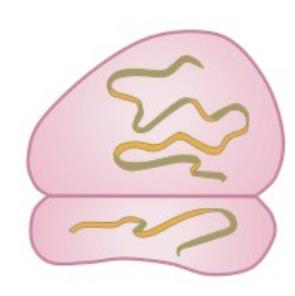
- transfer RNA and proteins.
- ribosomal RNA and DNA.
- ribosomal RNA and proteins.
- messenger RNA and proteins.
Question 19
The secondary lymphoid organs include
- tonsils, spleen, and bone marrow.
- spleen, tonsils, and lymph nodes.
- bone marrow and thymus.
- lymph fluid, spleen, and thymus.
Question 20
In 2022, with international borders re-opening, Australia became concerned about the potential for returning tourists from popular holiday spots, such as Bali, bringing in foot and mouth disease. At the airport, signs informing incoming passengers alerted them to the risk that they may be unintentionally bringing in the disease if they had been to rural areas.
This is an example of a
- scientific strategy.
- method to control the spread.
- social strategy.
- method to eliminate the pathogen.
Question 21
Chitinases are a chemical defence that plants produce in response to
- insects.
- bacterial infections.
- fungal infections.
- viral infections.
Question 22
The following graph relates to questions 22 and 23

From the graph, it is reasonable to infer that
- the first exposure to a pathogen occurred at point 2.
- no antibodies were present after 30 days.
- a second exposure to a pathogen occurred at point 1.
- the presence of memory cells created a larger response after 40 days.
Question 23
The individual had
- active natural immunity.
- artificial passive immunity.
- natural passive immunity.
- active passive immunity.
Question 24
Hominoids are different from hominins as
- they have binocular vision.
- they are usually quadrupedal.
- they are only hominins and their bipedal ancestors.
- they have colour vision.
Question 25
Data was obtained from a practical investigating the time it would take for lipase to convert lipids into fatty acids and glycerol.
Three trials were conducted by three different students, each obtaining similar data. The data could be described as
- repeatable.
- reproducible.
- accurate.
- the true value.
Question 26
A student measured the change in carbon dioxide in plants for their Extended Practical Investigation (EPI). They conducted the experiment over 3 days, conducting a separate trial each day. When analysing their data, they noticed that the data collected on day 2 was consistently lower than the data collected on day 1 and 3. The most likely explanation of the discrepancy is
- the probes were not calibrated.
- the students used a different probe on day 2.
- the students used a different plant on day 2.
- could be any or all of the above.
Question 27
Boa constrictors are non-venomous snakes, native to South America and the Caribbean, that kill their prey by suffocating them. Skeletons of the snakes show that they have a pelvis and hind legs kept under their skin. These structures are examples of
- vestigial structures.
- homologous structures.
- index fossils.
- transitional fossils.
Question 28
The Howea palms on Lord Howe Island underwent speciation despite existing in the same geographical range. This is an example of
- allopatric speciation.
- convergence.
- homologous structures.
- sympatric speciation.
Question 29
Following a routine blood test, a student was found to have elevated levels of plasma cells. This suggests
- they have recently suffered an allergic reaction.
- they have a high number of virally infected cells.
- they have recently been exposed to a pathogen.
- they have inflammation in the body.
Question 30
For short term protection against a cellular pathogen, the body would benefit from high numbers of
- plasma cells.
- B memory cells.
- cytotoxic T cells.
- mast cells.
Question 31
MHC II markers are found on
- all nucleated cells.
- mature red blood cells.
- antigen presenting cells.
- interferons.
Question 32
The following image depicts which form of genetic change in a population?
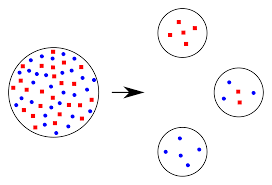
- Bottleneck effect
- Founder effect
- Selective breeding
- Natural selection
Question 33
For a value, found in data collected in an experiment, to be deemed as accurate
- it must be close to other values collected in the data.
- it must be close to the true value.
- it must be obtained using SI units.
- the same equipment must be used each trial.
Question 34
Bt corn has a gene inserted from a bacterium that, when expressed, makes the corn less susceptible to insect attack, as it produces a toxin that targets insects but is ineffective on humans. A company doing trials on the efficacy of Bt corn failed to accurately report their findings. The company breached the ethical concept of
- integrity.
- non-maleficence.
- justice.
- beneficence.
Question 35
When oxygen is in short supply in animals
- 26 ATP and lactic acid is produced.
- 2 ATP and ethanol is produced.
- 2 ATP and lactic acid is produced.
- 2 ATP and carbon dioxide is produced.
Question 36
A limitation in using amino acid sequences when determining relatedness between individuals is
- silent mutations are not evident.
- different nucleotide sequences can code for the same amino acid.
- mutations do not occur at a consistent rate.
- all the above.
Question 37
‘Lucy’ is one of the earliest Australopithecine fossils to have been discovered. She was discovered in Ethiopia and her remains have been dated to over 3.2 million years old. When comparing Lucy to other Homo fossils, it would be expected that Lucy
- had a more bowl-shaped pelvis.
- had a higher foot arch.
- has longer arms than legs.
- had a flatter rib cage.
Question 38
When gene flow is occurring between populations,
- speciation is less likely to occur.
- variation is more likely to exist in separate populations.
- the populations are at reduced risk of extinction.
- all the above.
Question 39
Index fossils are
- rare.
- existed for a short period of time.
- found in a limited geographical region.
- all the above.
Question 40
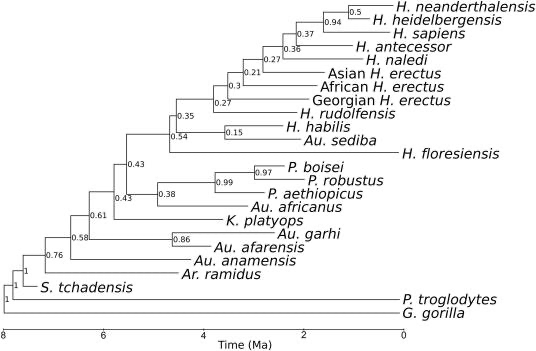
Based on the information in the phylogenetic tree, it can be stated that
- Asian Homo erectus diverged prior to African Homo erectus.
- P. boisei and P. robustus diverged the most recently.
- H. neanderthalensis is more closely related to H. heidelbergenesis than H. sapiens.
- G. gorilla diverged the most recently.
Section B
80 marks.
Question 1
The following diagram shows the simplified process of the protein secretory pathway.
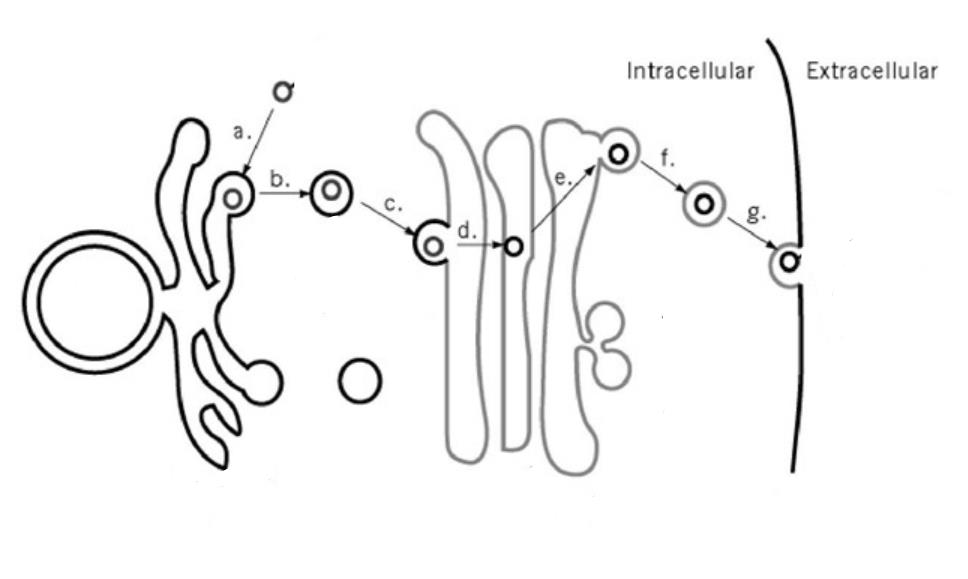
- Complete the following table to identify three organelles and their role in the pathway. ]]3
| Organelle | Role in the protein secretory pathway |
|---|---|
- What are the monomers of proteins? ]]1
The following chart shows the amino acid codes.
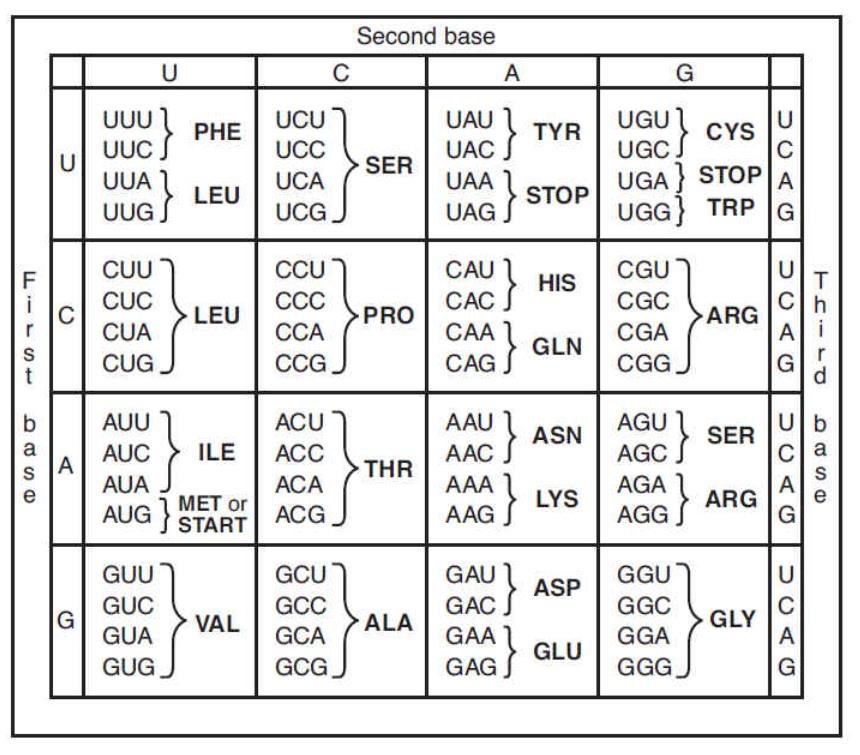
- The DNA template strand for the protein produced is TAC AAA TCT GGA GCG TTA AGC
The mRNA strand is: ]]1
The amino acids are: ]]1
- At the tenth nucleotide, a cytosine base is inserted. What is the name of this type of mutation, and how does this affect the amino acid sequence? ]]2
Question 2
CRISPR Cas 9 is a technology that allows genomes to be edited in a more precise manner than had previously been possible.
-
What does CRISPR stand for? ]]1
-
Describe a similarity and a difference between Cas9 enzyme and traditional endonucleases, such as EcoRI. ]]2
-
Describe the process by which a recombinant plasmid of insulin is created. Include reference to the β galactosidase gene in your response. ]]6
Question 3
Pineapples and cacti are examples of CAM plants, which are adapted to dry and arid conditions.
- Explain the importance of water in photosynthesis? ]]3
- Compare how carbon fixation occurs in C4 and CAM plants. ]]4
- Identify two co-enzymes used in photosynthesis and outline each of their roles. ]]4
The graph below shows carbon fixation in an unknown plant.
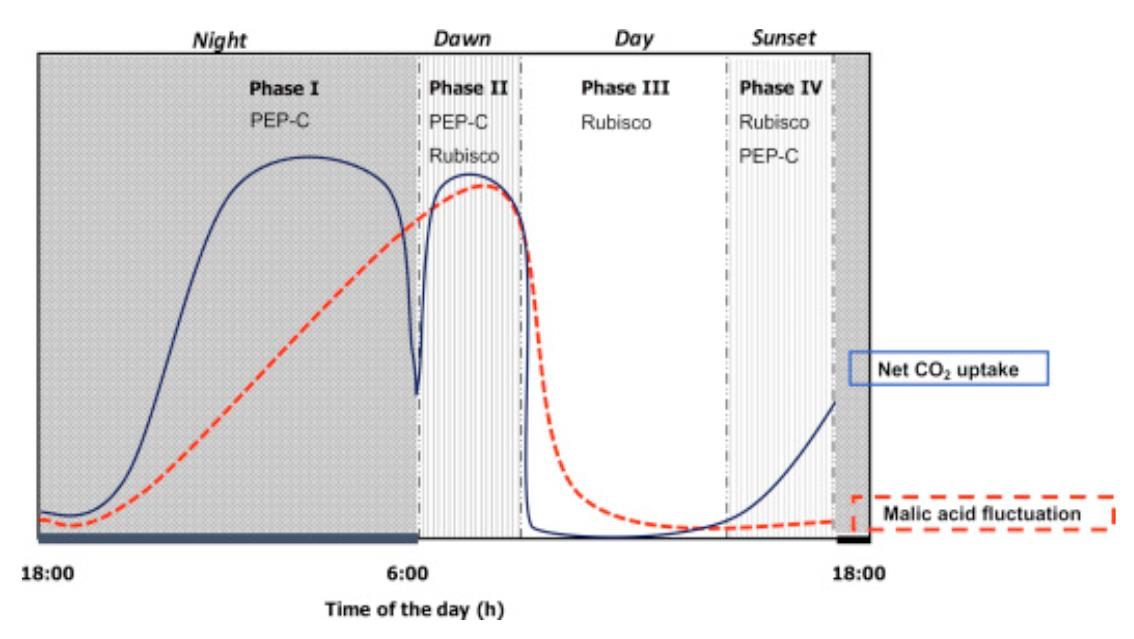
- What type of plant would create the data shown above? Refer to net CO2 uptake and malic acid fluctuation to justify your response. ]]3
Question 4
Plants, unlike animals, do not have a lymphatic system to protect them from invading pathogens. However, some plants can release toxins, such as oxalic acid, that are distasteful to organisms such as caterpillars.
- What is the role of primary lymphoid tissue? ]]1
- Rahul had been exposed to a strain of influenza in 2022 and was unwell for about a week until he fully recovered. When asked the following year if he intended to have an influenza vaccine, he declined as he said he already had memory cells. Explain why Rahul may still be susceptible to the influenza virus in 2023, despite memory cells continuing to circulate in his body. ]]4
- Name a physical barrier present in plants to minimize the risk of pathogens and describe how it is used. ]]2
Question 5
Lyme disease is a tick-borne infection caused by bacteria in the Borrelia burgdorferi sensu
lato group. Ticks are parasitic arachnids that feed on the blood of other animals. Insect repellents are effective preventions against ticks.
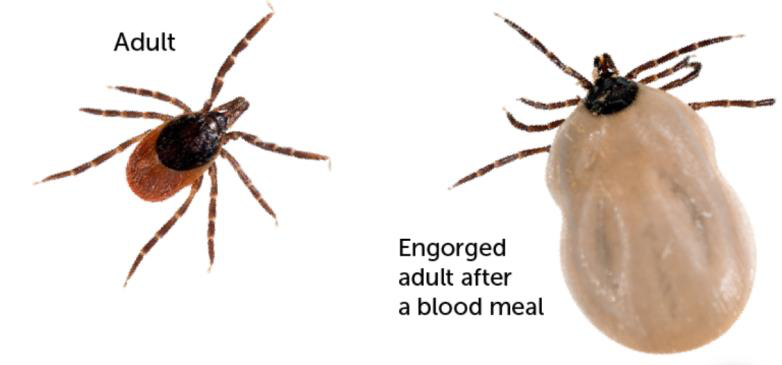
Initially, a person infected with Lyme disease will show a pink or red rash that starts as a small red spot, this then gradually spreads in a much larger circle with a characteristic bulls-eye appearance called erythema migrans, normally appearing between 3 and 32 days after being bitten by an infected tick.
Not everyone with Lyme disease gets the rash. There may also be fever, headaches and tiredness.
If left untreated, the Lyme disease infection can spread through the bloodstream and can cause infection in the brain and membranes surrounding the brain, and infection in or around the heart. The disease can also cause inflammation of joints and cause joint pain and long-term neurological symptoms.
-
Lyme disease is classified as re-emerging. What is meant by this term? ]]1
-
Describe one scientific and one social strategy that could be used to prevent Lyme disease. ]]4
-
It was suggested that herd immunity may help to reduce the spread of Lyme disease in the population. Do you agree or disagree with this suggestion? Justify your response. ]]2
-
An individual infected with Lyme disease was given a course of antibiotics. They felt better after a few days so decided to stop taking the tablets and keep them in case of reinfection. What potential consequence does this have for the individual and the bacterium? ]]3
-
Lyme disease is characterized by inflammation around the brain and heart. Describe the key events that occur during an inflammatory response and suggest a short-term solution to an individual suffering from inflammation. ]]5
Question 6
The Galapagos finches aided Charles Darwin to develop his ground-breaking theories on natural selection. He found that the finches’ beaks were distinct on different islands, depending on the food sources available.
The graph below shows the change in beak shape over time on two different species of Galapagos finch, Geospiza fortis and Geospiza scandens.
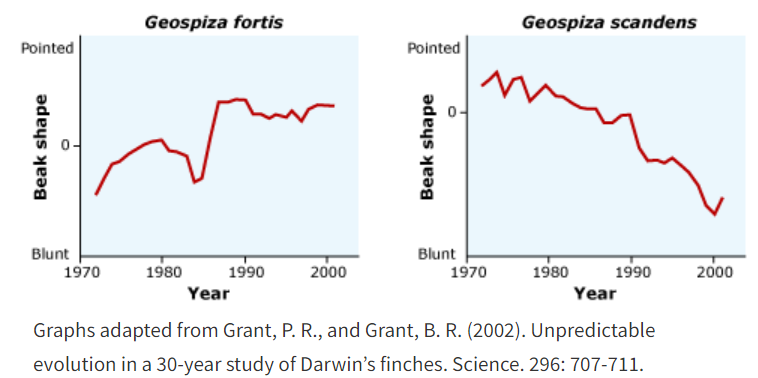
- With evidence from the graphs, describe the selection pressure acting on G. scandens. ]]2
- Outline the process by which the finches would have displayed different beaks on different islands, despite sharing recent common ancestry. ]]5
- List two characteristics of beaks that would facilitate fossilization? ]]2
Question 7
Debunking the myth that Aboriginal stories are just myths: the Yamuti and the megafauna Diprotodon
Jacinta Koolmatrie is an Adnyamathanha and Ngarrindjeri person who works in the South Australian museum sector.
https://australian.museum/learn/first-nations/yamuti/
Since the beginning of time my ancestors have been telling stories. These stories, derived from the land, waters and skies. We express our stories using our voice and through our actions. They are told at night, when the fire crackles and the stars are bright. They are told through the marking of the walls using sacred pigments the land has provided for us. They are the foundations of our songs and dances. Our language itself would not exist without these stories.
As a young Adnyamathanha kid, I was told the story about the Yamuti. The Yamuti was a very large and scary animal that specifically looked to steal little kids. This story was not told in a way that placed it in the past, the Yamuti existed in real time. We were always told that if we ever saw the Yamuti we had to run to the nearest tree and climb high, because the Yamuti had one flaw, the Yamuti could not look up. Despite us little kids having this one advantage, the thought of being taken by the Yamuti was scary enough to make us never want to leave our mothers side, especially if we were outside in the dark.
One of the striking descriptions of the Yamuti was that he is very big. Bigger than us kids especially. But this isn’t a unique description, many of the animals in our stories are big.
Thousands of years ago megafauna were abundant on this land. One animal in particular was the Diprotodon, the largest marsupial to have existed. The Diprotodon was incredibly large and thought to have been a browser, eating plants like shrubs. However, it’s mostly believed to have been a harmless animal.
Thinking more about the Diprotodon’s physical description, it is oddly similar to that of the Yamuti. Interestingly, I was even told that our understanding that a Yamuti could not look up, did show some potential of being present on a Diprotodon’s skeleton. Of course, our understanding of the behaviour of a Yamuti does not really line up with the Diprotodon’s behaviour. But maybe it gives some insight into a characteristic that Palaeontologists aren’t yet aware of, or even something they may never be aware of.
If the Yamuti and the Diprotodon are the same animal, this shows an incredible depth of knowledge that has flowed through thousands of Adnyamathanha generations. In our region the most recent dating of bones is no younger than 40,000 years!
Whether or not you believe the Diprotodon is the Yamuti, our stories are derived from the truth. Something happened over 40,000 years ago that made my ancestors tell a story to protect their children. This relates to all of our stories. They simply weren’t told to pass the time, these stories were created to help us live on this land. The most amazing thing about all of this is that despite animals becoming extinct, lands changing, and our stories being reframed as myths, they have prospered right through to today.
- Identify how Indigenous stories of the Yamuti suggest that it may be one of the ancient marsupials Diprotodon, which was prevalent in the Australian landscape 40,000 years ago. ]]2
- How do Indigenous stories, communicated as spoken language, art, dance and song, demonstrate connection to Country and Place. ]]2
- Identify and describe the process by which remains, such as those of Diprotodon, could be dated as being 40,000 years old. ]]3
- State two features of the skull that could be used to differentiate a hominoid from a hominin. ]]2
Question 8
As part of the extended practical investigation task, a group of students collected a data set for analysis.
They wanted to investigate effect of different wavelengths of light on the rate of photosynthesis. They counted the number of spinach leaf discs that rose to the top of a solution each minute, after being exposed to different wavelengths of light. The rising of the spinach leaves indicated that photosynthesis was occurring as oxygen bubbles were being produced as an output of this reaction.
Some of their data is shown below. The data is cumulative.
| Minutes | Number of spinach leaves that rose to the sureface | Number of spinach leaves that rose to the sureface | Number of spinach leaves that rose to the sureface |
|---|---|---|---|
| Red Wavelength | Green Wavelength | Blue Wavelength | |
| 1 | 0 | 0 | 0 |
| 2 | 0 | 0 | 0 |
| 3 | 0 | 0 | 0 |
| 5 | 3 | 0 | 2 |
| 6 | 5 | 0 | 4 |
| 7 | 9 | 0 | 7 |
| 8 | 12 | 1 | 8 |
| 10 | 15 | 3 | 12 |
| 12 | 15 | 6 | 13 |
| 14 | 15 | 6 | 13 |
- On the grid below, construct a line graph of the data. ]]3
- What type of data was collected by the students? Justify your response. ]]2
- The students were discussing the precision of their data. Is the data precise? Explain. ]]2
- According to the data, at which wavelength of light was there the least amount of photosynthesis occurring? Suggest a reason why. ]]2