An atom has a limited number of electron spots available at orbitals, so these different electron shells correspond to different levels of electron energy.
An atom has subshells. A subshell is identified with a shell number and a subshell letter.
There are 4 subshell types. You can use speed fast to help memorize the subshells, “spdf”.
- s subshells can contain 2 electrons.
- p subshells can contain 6 electrons.
- d subshells can contain 10 electrons.
- f subshells can contain 14 electrons.
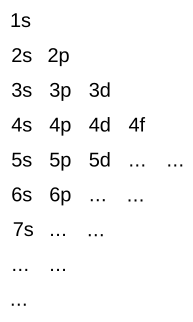
Figure: These are all the subshells.
When an electron moves from higher subshell to a lower one, electromagnetic radiation is emitted.
The subshells sorted by energy is 1s, 2s, 2p, 2s, 3s, 3p, 4s, 3d, 4p, 5s, 4d, 5p, 6s.
Figure: The subshells electron filling order. The shells of lower energy levels are filled first.
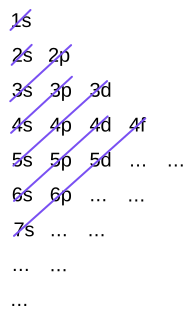
Figure: Subshells and distance from the nucleus.

Normally the electrons fill the shells in the normal order, but excited electron shells can leave some empty spots as they jump from lower to higher energy subshells.