Section A
40 marks
Question 1
The following diagram represents a molecule.
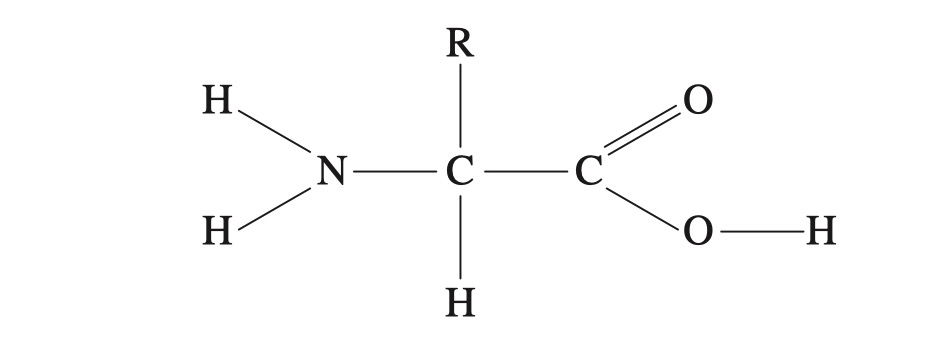
This molecule is
A. a nucleotide.
B. rRNA.
C. an amino acid.
D. a polypeptide.
N C C
H O H
H
Question 2
The central principle of molecular biology is that genetic information flows in one direction only. This means that within a cell,
A. translation follows transcription.
B. replication follows transcription.
C. transcription follows translation.
D. transcription follows replication.
Question 3
A molecule of tRNA has the anticodon sequence GUA.
The sequence of the original DNA template triplet would be
A. CAT.
B. CAU.
C. GAT.
D. GTA.
Question 4
In most eukaryotic cells, the proteome is many times larger than the genome. This is due to
A. alternative splicing.
B. post-translational modification.
C. nucleic acids being less complex than proteins.
D. many genes coding for the same type of protein.
Use the following information to answer Questions 5–7.
The following diagram represents the trp operon. Sections 1, 2, 3 and 4 indicate parts of the operon.

Question 5
Which of the following gives the names of sections 1–4?
| 1 | 2 | 3 | 4 |
| promoter | leader region | operator | structural genes |
| operator | structural genes | promoter | leader region |
| promoter | operator | leader region | structural genes |
| operator | leader region | structural genes | promoter |
A. promoter leader region operator structural genes
B. operator structural genes promoter leader region
C. promoter operator leader region structural genes
D. operator leader region structural genes promoter
Question 6
For the trp operon to be activated,
A. a repressor binds to the operator and structural genes are transcribed.
B. a repressor binds to the promoter and structural genes are transcribed.
C. DNA polymerase binds to the promoter and moves unimpeded along the operon.
D. RNA polymerase binds to the promoter and transcribes the structural genes because the repressor is not bound to the operator.
Question 7
When tryptophan levels are high, hairpin loops form in the trp operon because the
A. repressor is not bound to the operator.
B. tryptophan is bound to the repressor and so cannot bind to the operator.
C. attenuation of the structural genes is unable to proceed.
D. repressor has not been expressed.
Use the following information to answer Questions 8–10.
Short tandem repeats (STRs) are regularly used to determine genetic uniqueness. For a criminal case involving theft, a biotechnologist used two STRs for 10 male suspects. The following diagram represents the two STRs (site 1 and site 2) that are located on the Y chromosome of three of the suspects. Each repeat is a sequence of four nucleotides (AGAT).
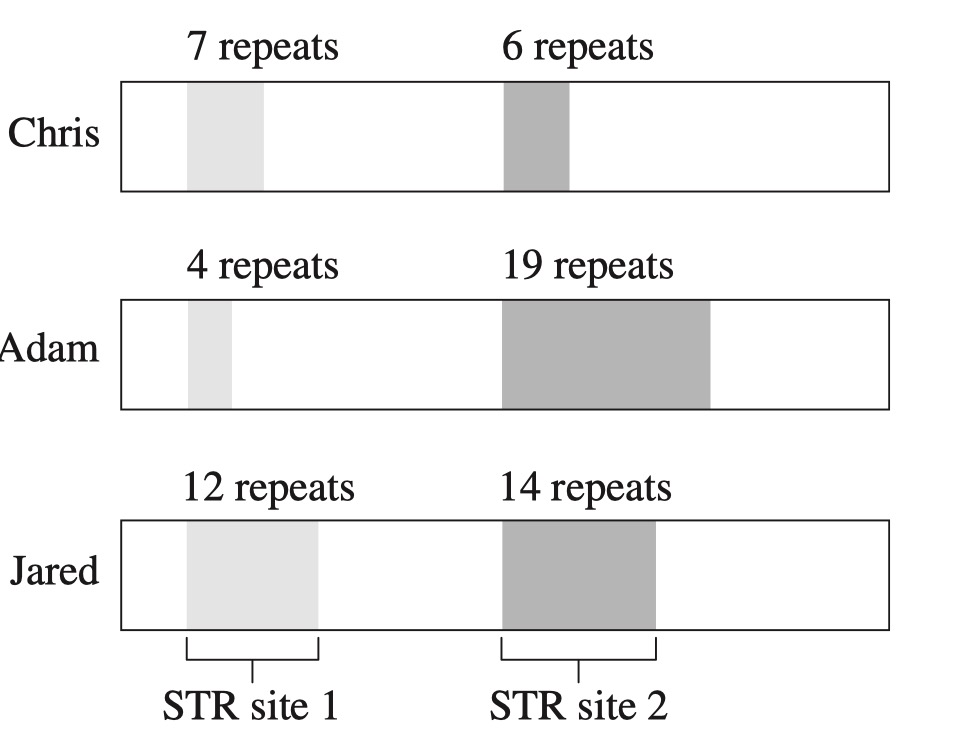
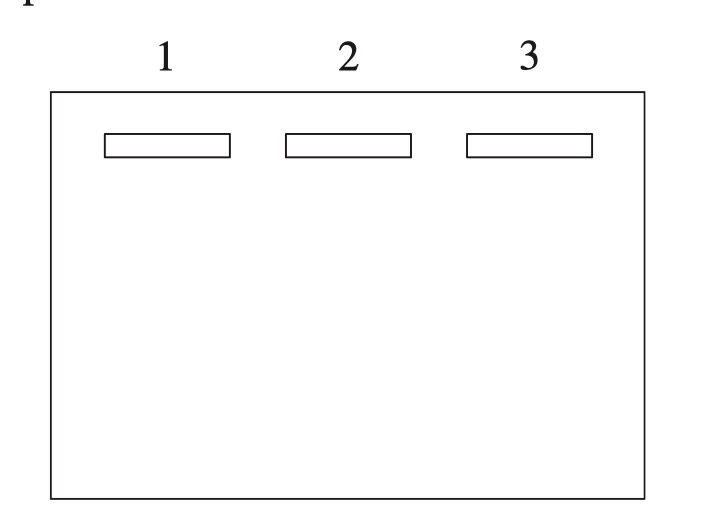
Each suspect’s DNA was extracted from a saliva sample, then purified and amplified. Small volumes were added into wells prior to gel electrophoresis. The results of the first run were surprising and are shown below.
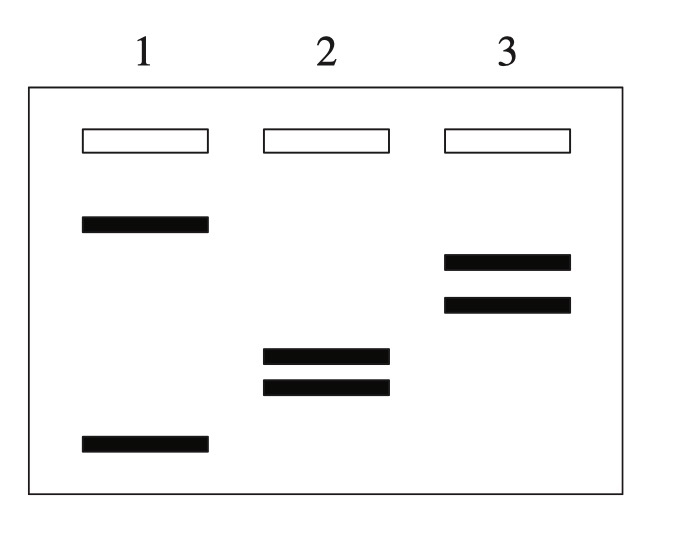
The biotechnologist then realised their error and repeated the gel electrophoresis with a small change in their methodology. The subsequent results are shown below.
Question 8
The results of the first gel electrophoresis were probably due to the
A. systematic error of not switching on the power source for the gel electrophoresis tank.
B. random error of connecting the electrodes the wrong way around.
C. random error of adding different volumes of DNA samples to each well prior to the run.
D. systematic error of piercing a hole in the wells when adding the DNA.
Question 9
Which of the following matches the gel electrophoresis lanes to the suspects?
| 1 | 2 | 3 |
| Adam | Chris | Jared |
| Jared | Adam | Chris |
| Chris | Adam | Jared |
| Jared | Chris | Adam |
A. Adam Chris Jared
B. Jared Adam Chris
C. Chris Adam Jared
D. Jared Chris Adam
Question 10
The criminal case involved theft and there was blood residue found on the stolen items. The STRs showed that only one of the 10 suspects had a profile that matched the profile from the blood residue. The evidence was thrown out of court and the individual was free to go due to the bioethical concept of justice.
The most likely reason for this is that
A. one blood sample found at a crime scene is not enough to extract sufficient concentrations of DNA.
B. more STRs should have been analysed because there may be many people other than the suspect that have the same profile.
C. the gel needed a greater voltage applied to obtain better resolution of the bands present for each suspect.
D. gel electrophoresis is expensive and funding for further testing must have been depleted.
Question 11
For polymerase chain reaction (PCR) to occur successfully for many cycles, in what order should the steps of the process occur?
A. extension annealing denaturation
B. annealing denaturation extension
C. denaturation annealing extension
D. extension denaturation annealing
Use the following information to answer Questions 12–14.
Purified Rubisco was exposed to a variety of conditions to determine its optimal functioning. In the investigation, samples of purified Rubisco were mixed into 0.5 mL of solutions containing equal concentrations of the substrates carbon dioxide and ribulose bisphosphate (RuBP). Each solution was incubated at a different temperature. After a set incubation period, the amount of phosphoglycerate (PGA) produced by each reaction was measured using the phosphoglycerate fluorescence test. In this test, a greater concentration of PGA produces a higher number of relative fluorescence units (RFU). Each reaction was repeated four times, and the results are shown in the following table.
| Relative fluorescence units (RFU) | ||||
| Temperature (°C) | Trial 1 | Trial 2 | Trial 3 | Trial 4 |
| 10 | 9 | 10 | 11 | 9 |
| 15 | 15 | 18 | 17 | 16 |
| 20 | 24 | 22 | 38 | 23 |
| 25 | 32 | 38 | 34 | 36 |
| 30 | 41 | 42 | 43 | 38 |
Question 12
The controlled variables in this investigation included
A. temperature and RFU.
B. the volume of the solution and the concentrations of the substrates.
C. RFU and the incubation period.
D. the humidity of the room in which the experiments were conducted and the time of day for the incubations.
Question 13
The result for trial 3 at 20°C was removed because the experimenter made an error during the trial. The experimenter could have
A. added too much carbon dioxide to the solution.
B. set the incubation temperature to be lower than 20°C.
C. incubated the mixture for a shorter time period.
D. doubled the volume of the solution.
Question 14
Based on the results of the experiment, which one of the following conclusions is reasonable?
A. As temperature increases, the enzyme starts to denature because its three-dimensional shape is altered.
B. As temperature increases, the number of collisions between RuBP, carbon dioxide and Rubisco increases.
C. As RFU increases, the activity of the enzyme decreases.
D. The optimal functioning of Rubisco occurs between 20°C and 30°C.
Question 15
The coenzymes involved in cellular respiration include
A. NADP and ADP.
B. NAD and ADP.
C. NADH and NADP.
D. acetyl CoA and ATP.
Question 16
Glycolysis occurs in the
A. stroma.
B. matrix.
C. cristae.
D. cytosol.
Question 17
Isolated human mitochondria were exposed to a variety of conditions to determine which conditions they best function under.
Which of the following identifies the optimal conditions for the mitochondria?
| Temperature (°C) | pH | Presence of |
| 37 | 7 | oxygen and glucose |
| 30 | 7 | pyruvate and glucose |
| 37 | 7 | oxygen and pyruvate |
| 37 | 10 | oxygen and glucose |
Question 18
Cyanide is a non-competitive inhibitor for the reaction between oxygen and cytochrome oxidase. The action of cytochrome oxidase is the last step of the mitochondrial electron transport chain, making any inhibition of this molecule potentially dangerous to health.
Based on this information, it would be reasonable to state that
A. the usual amount of ATP per glucose molecule would be formed in the presence of cyanide.
B. cyanide has a similar shape to oxygen because they are both able to bind to the active site of cytochrome oxidase.
C. cyanide poisoning leads to a reduction in glycolysis due to a build-up of glucose within the exposed cells.
D. when cyanide binds to cytochome oxidase, it changes the shape of the active site and prevents oxygen from binding.
Question 19
During anaerobic respiration, a human muscle cell produces
A. lactic acid only.
B. carbon dioxide and water.
C. lactic acid and carbon dioxide.
D. carbon dioxide and ethanol.
Question 20
Biomass refers to living or recently dead plant and animal materials, and can be used to produce biofuels. Biomass is often grown as crops, which provide the feedstock in biofuel production. Corn is commonly used as a feedstock in ethanol production. It mainly comprises starch; as starch is a complex carbohydrate, the first step of producing ethanol from corn is breaking down the starch. The four steps that occur after breaking down the starch are listed below, but they are not in the correct order.
• W: Provide an anaerobic environment.
• X: Purify the ethanol.
• Y: Expose broken-down starch to a warm and neutral environment.
• Z: Add a source of enzymes to the environment.
Which of the following identifies the correct order of the steps?
| Step 1 | Step 2 | Step 3 | Step 4 |
| W | X | Y | Z |
| Z | Y | X | W |
| Y | Z | W | X |
| Y | Z | X | W |
Question 21
Human skin is very complex and serves a range of functions. Skin cells are plate-shaped and form a layer that reduces the entry of pathogens into the body’s internal environment. Sebum is an antibacterial substance that is smeared over the skin cells to reduce the effect of opportunistic bacteria. However, the bacterium Staphylococcus epidermidis lives harmoniously on the skin; it reduces fungal infections and helps protect the skin from water loss and damage.
The presence of Staphylococcus epidermidis on human skin is an example of a
A. chemical barrier only.
B. microbiota barrier only.
C. physical barrier only.
D. chemical, microbiota and physical barrier.
Question 22
Which one of the following cell types is involved in the destruction of multicellular parasites that are too large to be phagocytosed?
A. neutrophils
B. eosinophils
C. macrophages
D. natural killer cells
Question 23
Pathogens come in all shapes and sizes. They can cause diseases that can be fatal, leave long-lasting side effects or be relatively harmless. Several pathogens and the diseases that they cause are listed below.
- the human immunodeficiency virus (HIV) that causes acquired immunodeficiency syndrome (AIDS)
- fungal Aspergillus spores that cause aspergillosis
- the coronavirus that causes COVID-19
- the prion that causes Creutzfeldt–Jakob disease
- the single-celled plasmodium that causes malaria
- the meningococcal bacterium that can cause meningitis Which of the pathogens listed are non-cellular pathogens?
A. 1, 2, 3 and 4
B. 1, 3 and 4
C. 2, 3, 5 and 6
D. 4, 5 and 6
Question 24
Antigen-presenting cells (APCs) are part of the innate immune response. Upon contact with a pathogen, an APC endocytoses the pathogen and eventually displays antigens on its surface for eventual activation of an immune response.
The antigenic fragments on the surface of the APC are bound to
A. self-markers.
B. major histocompatibility complex (MHC) I.
C. MHC II.
D. non-self markers.
Use the following information to answer Questions 25–27.
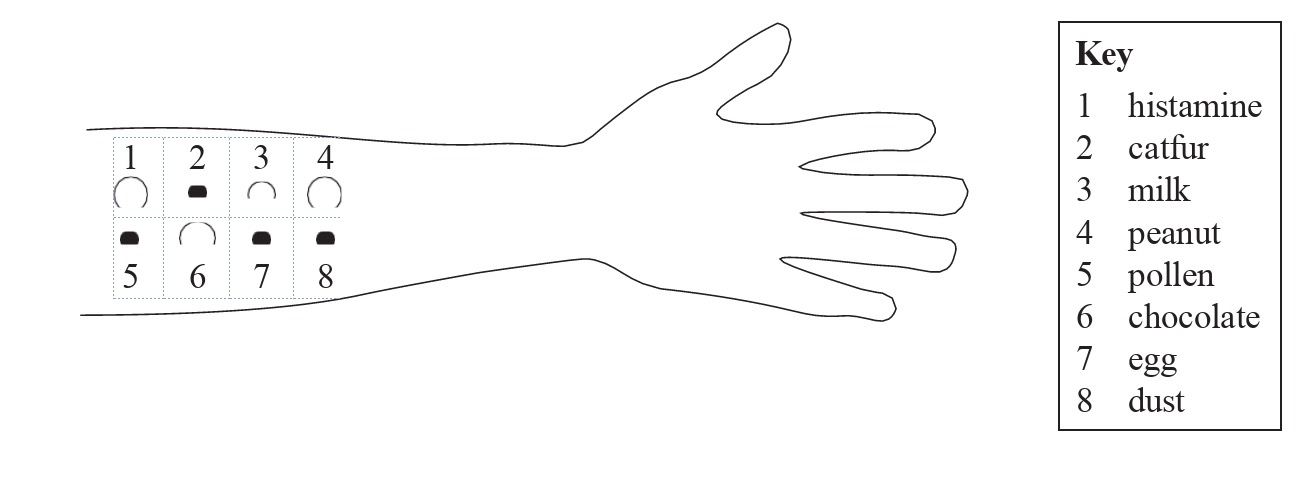
Tiara is a toddler who has started to eat a wide variety of foods. One day, she developed a swollen tongue and red rashes on her skin after consuming peanut and chocolate ice-cream. Tiara’s parents arranged for Tiara to undergo an allergy test called a skin prick test. The test involved a doctor using a lancet to insert a small amount of suspected allergens into areas of Tiara’s skin and observing whether a reaction (in the form of a red rash) occurred. Histamine – which is a chemical that the body releases during an allergic reaction, causing a red rash and sometimes anaphylaxis – was tested first, followed by seven allergens; these were tested on Tiara’s forearm. The following diagram shows the result of Tiara’s skin prick test.
The black circles indicate no reaction, and the white circles indicate a reaction. The size of each white circle indicates the degree of inflammation.
Question 25
The purpose of the histamine skin prick test was to
A. serve as a negative control.
B. ensure that Tiara would not experience an anaphylactic reaction to the allergens being tested.
C. observe Tiara’s reaction to histamine and compare this to the other skin prick tests.
D. observe an anaphylactic reaction under controlled conditions.
Question 26
The underlying immunology behind an allergic reaction is that
A. eosinophils secrete histamine upon contact with a specific allergen.
B. plasma cells have previously secreted immunoglobin E (IgE), which binds to the allergen and causes histamine to be released by T cells.
C. cytotoxic T cells bind to the allergen, which stimulates their destruction.
D. the IgE antibodies on a mast cell bind to the allergen, causing the exocytosis of histamine.
Question 27
Based on Tiara’s test results, which one of the following would be the most suitable advice that the doctor could give to Tiara’s parents?
A. ‘Don’t let Tiara play with cats and or dogs.’
B. ‘Tiara should wear a face mask when she goes outside during spring.’
C. ‘Tiara should not eat chocolate, peanut or dairy products.’
D. ‘Don’t let Tiara eat chocolate-covered peanuts.’
Use the following information to answer Questions 28–30.
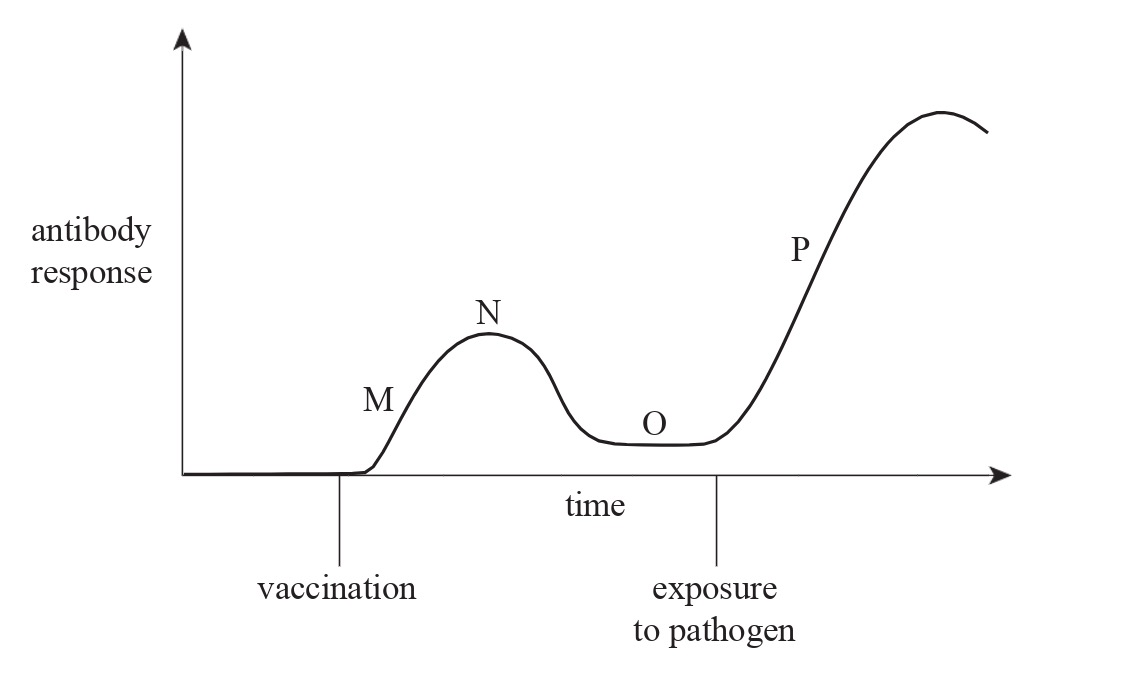
The following graph shows a typical immune response to an administered vaccine and then later exposure to the pathogen. Regions M–P indicate different parts of the response.
Question 28
Vaccination is a form of
A. natural active immunity.
B. natural passive immunity.
C. artificial active immunity.
D. artificial passive immunity.
Question 29
The greatest number of plasma B cells would be measured in region
A. M.
B. N.
C. O.
D. P.
Question 30
The secondary response is
A. weaker than the primary response due to the absence of immature B cells in the system.
B. slower than the primary response.
C. stronger than the primary response because the concentration of antigens on the pathogen is much higher than in the vaccine.
D. stronger and faster than the primary response because many memory cells remain after the primary response to the vaccine has subsided.
Use the following information to answer Questions 31 and 32.
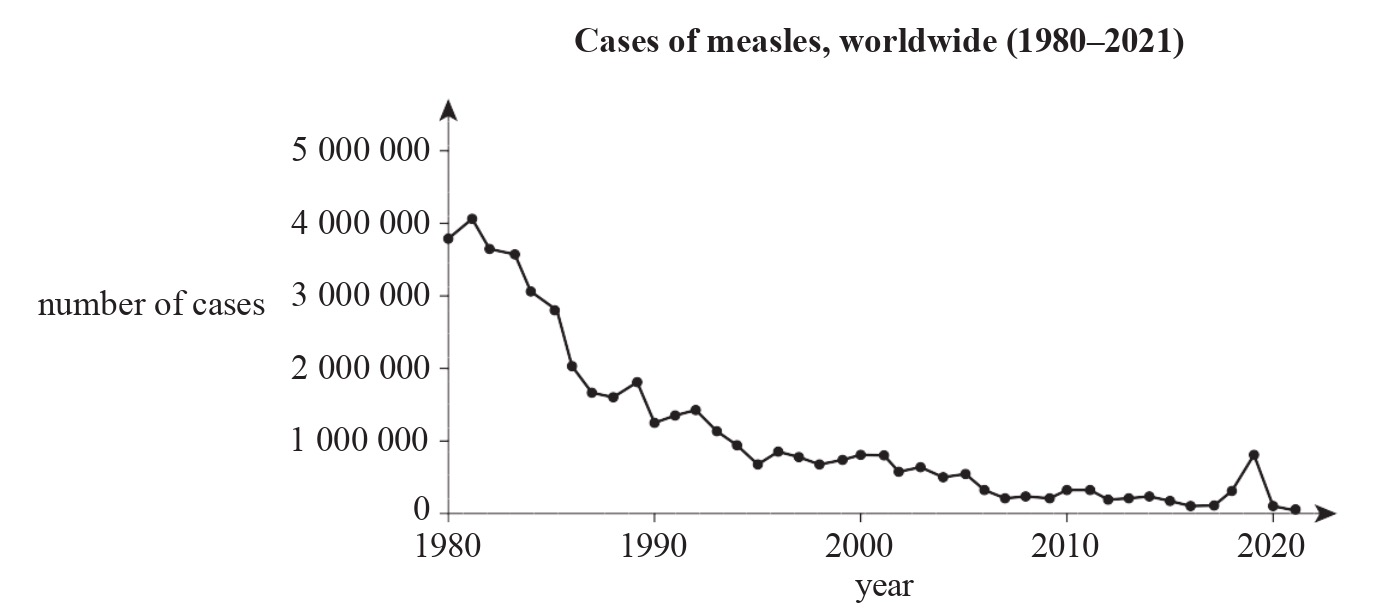
Measles is an extremely contagious viral disease that was virtually eradicated around the world as a result of a global vaccination program. The following graph shows the number of worldwide measles cases from 1980 to 2021.
Question 31
The number of measles cases in 2002 was approximately
A. 550 000
B. 600 000
C. 1 000 000
D. 1 600 000
Question 32
In 2019, a significant increase in the number of measles cases can be observed. This was most likely due to
A. genetic drift.
B. low vaccination rates.
C. increased herd immunity.
D. an ineffective batch of vaccines.
Question 33
A population of 100 rabbits live in a location with a large amount of light-coloured features and very few hiding places. In the population, there were 60 black rabbits and 40 white rabbits. Four foxes, which
inhabited the same area and preyed on the rabbits, had difficulty seeing the white rabbits due to the rabbits’ ability to camouflage themselves in the light-coloured environment.
Assuming that some of the rabbits in the population survive, it would be expected that over three generations,
A. the allele frequency of white rabbits would increase.
B. the gene pool would remain the same.
C. the black rabbits would have a selective advantage.
D. any surviving black rabbits would mutate to grow white fur.
Question 34
Which one of the following situations would most likely lead to an organism being fossilised?
A. the organism falling into a deep, fast-flowing river
B. the organism dying in a sandy, windy desert
C. the organism falling into a deep hole that is then filled with wet mud
D. the organism being consumed by scavengers with only the organism’s bones remaining
Question 35
The following diagram shows four different locations that contain similar strata layers and fossils.
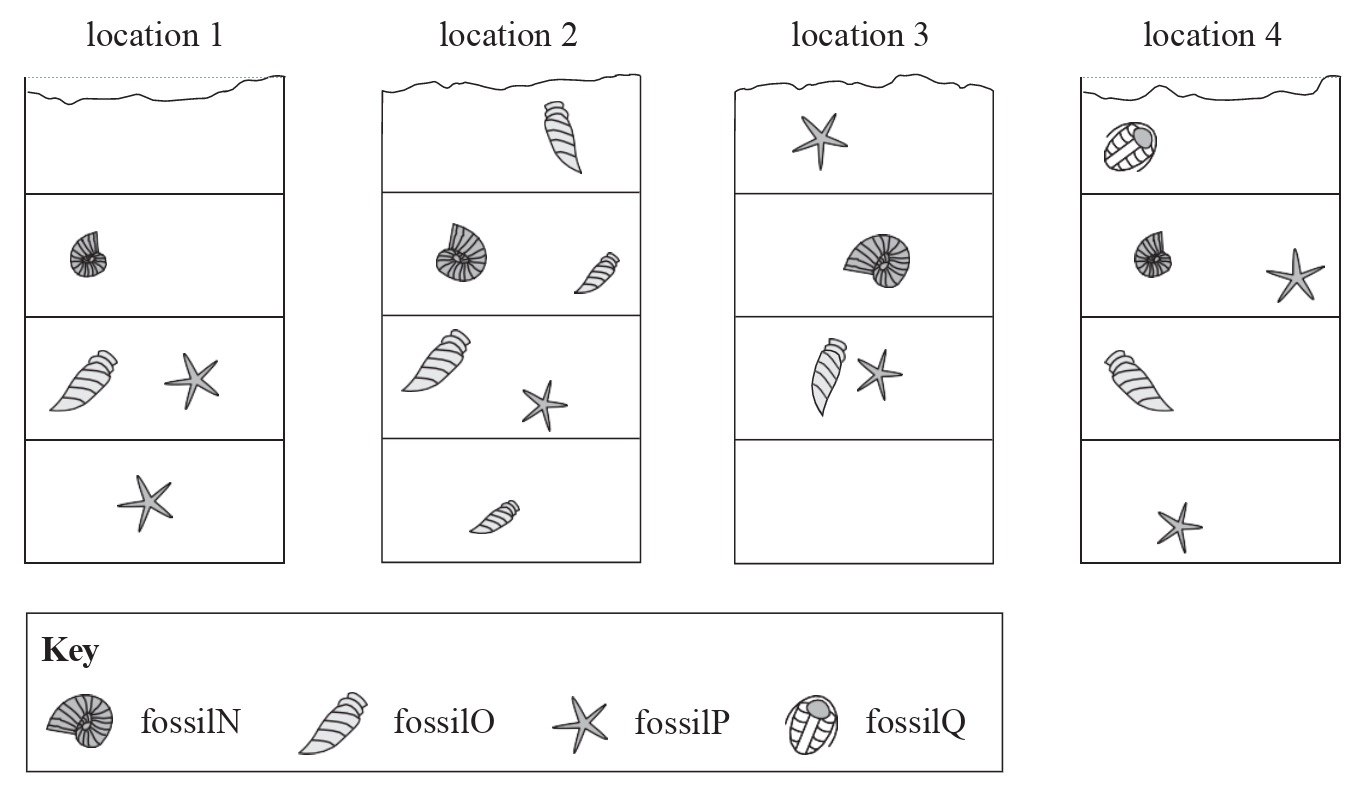
Which fossil would be most useful for determining the relative ages of all the fossils?
A. fossil N
B. fossil O
C. fossil P
D. fossil Q
Question 36
A fully preserved woolly mammoth was uncovered after a glacial melt. A sample of organic material from the mammoth was absolutely dated using the rate at which carbon-14 decays into nitrogen-14. This rate
of decay is shown in the following graph.
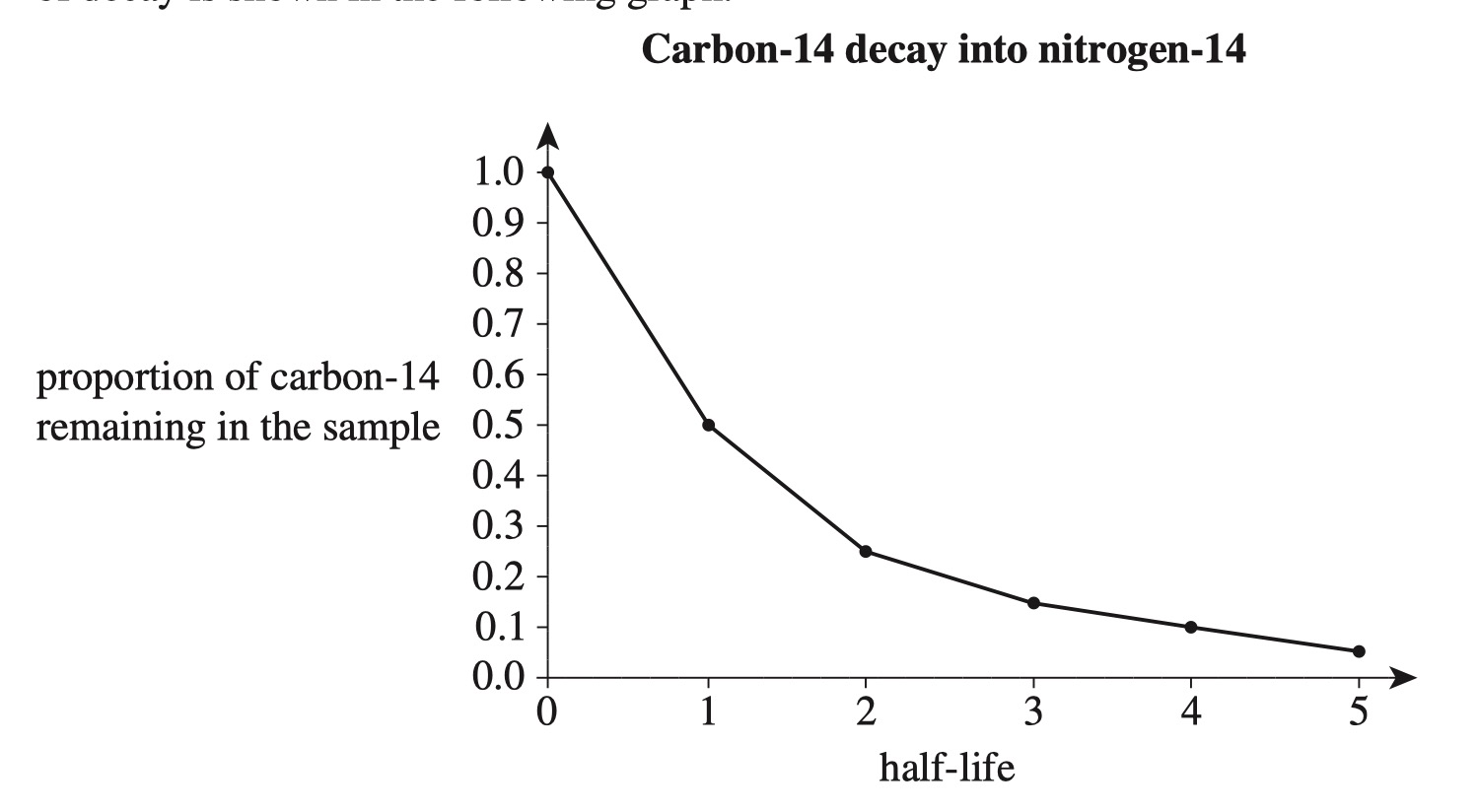
Carbon-14 has a half-life of 5730 years.
If the mammoth was determined to be 23 000 years old, what is the approximate proportion of carbon-14 present in the sample?
A. 0.1
B. 0.2
C. 0.5
D. 0.8
Question 37
Which one of the following would provide the strongest evidence of Homo floresiensis existing at the same time as Homo sapiens?
A. the discovery of only one fully preserved Homo floresiensis skeleton in the same strata as Homo sapiens fossils
B. the discovery of several partial Homo floresiensis fossil samples in the same strata as Homo sapiens fossils
C. a strata containing Homo floresiensis fossils being found near volcanic rock
D. the uncovering of many fossil samples of Homo floresiensis in strata that are different to Homo sapiens fossils
Question 38
The following diagram compares the band patterns along human chromosome 2 and chimpanzee chromosomes 2A and 2B.
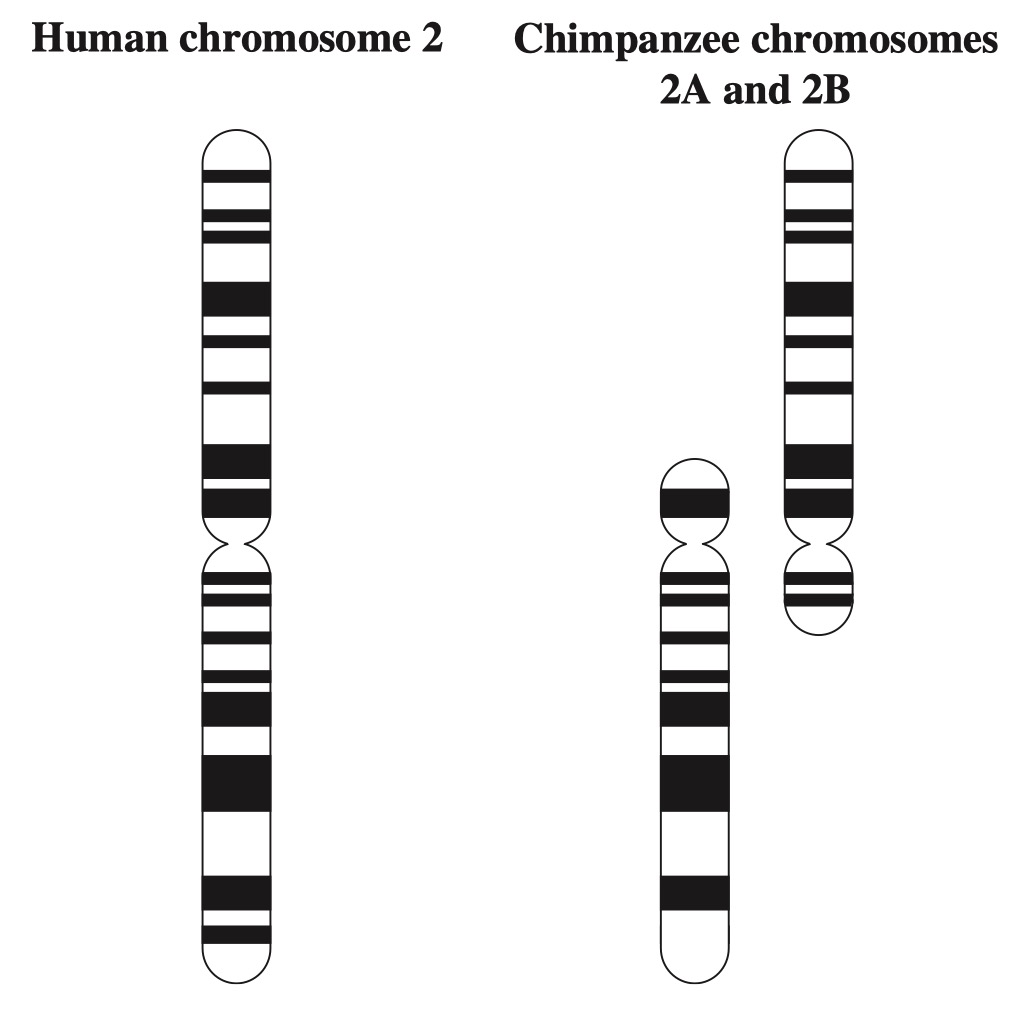
Based on the diagram, which one of the following conclusions can be made?
A. The molecular homology of the chromosomes shows that chimpanzees and humans have a recent common ancestor.
B. A translocation mutation occurred between the chimpanzee chromosomes 2A and 2B that may have reproductively isolated the descendants of other chimpanzees.
C. Human chromosome 2 does not show enough molecular homology with chimpanzee chromosomes 2A and 2B to infer close relatedness between humans and chimpanzees.
D. The evidence obtained from chromosome band patterns is stronger than evidence obtained using molecular homologies between DNA loci, such as cytochrome c, or common proteins, such as haemoglobin.
Question 39
A 2016 mtDNA study revealed that Australia’s First Nations peoples are the oldest known civilisation on Earth, with ancestries reaching back approximately 60 000 years. The earliest Indigenous South American civilisations stretch back about 10 000 years.
It would be appropriate to conclude that
A. the mtDNA of Indigenous South Americans would show more homology than the mtDNA of Australia’s First Nations peoples.
B. the mtDNA of Australia’s First Nations peoples would show more homology than the mtDNA of Indigenous South Americans.
C. mtDNA comparisons in homologous regions of the mitochondrial genome would be the same regardless of the origins of the individuals being compared.
D. the mutations accumulating in the mtDNA would be less prone to influencing the survival of the individual than mutations accumulating along the nuclear genome.
Question 40
A mud wasp builds a mud nest and fills it with dead spiders or caterpillars to feed its larvae. After the nest is vacated by the mud wasp, it can be very well preserved, particularly if the nest is in a cave.
Mud nests were found on the surface of an Indigenous rock painting of a kangaroo in a cave in Western Australia’s Kimberley region. Radiocarbon dating of the contents of the mud nests indicated that the nests are about 17 300 years old.
It can therefore be concluded that the painting is
A. less than 17 300 years old.
B. exactly 17 300 years old or older.
C. older than 17 300 years old.
D. somewhere between 17 000 and 18 000 years old.
Section B
80 marks
Question 1 (7 marks)
The following diagram represents a polypeptide sequence that is part of a secretory protein.
Met - Leu - Ala - Met
a. Name the process that assembles the amino acids in the order shown above and identify
the location where this process occurs. 2 marks
Process Location
The genome carries a universal code, and the section coding for the polypeptide sequence shown above is a small part of it.
b. i. Define what is meant by a universal code. 1 mark
ii. Would it be true to say that both the polypeptide sequence shown above and the codons involved in the sequence would be the same in all individuals? Explain
your response. 2 marks
c. After an appropriate stimulus, a cell begins synthesising the secretory protein. After a short period of time, the protein starts to increase in extracellular concentration.
Name the organelles involved in the processes that occur after the protein has been
synthesised and describe their roles. 2 marks
Question 2 (9 marks)
Transthyretin amyloidosis is a rare protein disorder that affects around 50 000 people worldwide. It is caused by changes in the transthyretin (TTR) gene, which produces the TTR protein. The condition causes a build-up or clumps of protein to form in the body’s organs and tissues and interfere with the heart and nerves.
A drug called Onpattro that is designed to disable the TTR gene to treat transthyretin amyloidosis was approved by the United States Food and Drug Administration in 2018 after clinical trials. In the trials, the drug reduced the symptoms of transthyretin amyloidosis by 80%. However, the drug must be taken regularly to keep TTR levels down and does not always halt disease progression.
a. State one ethical approach that the scientists conducting the clinical trials could have
adopted and explain how this would have informed their treatment of patients in the trials. 3 marks
CRISPR-Cas9 has also been hailed as a revolutionary way to treat diseases such as transthyretin amyloidosis. To be used as a treatment, the CRISPR–Cas9 complex must be packaged in a way that shields it from degradation and delivered to the site in the body where it is needed.
b. Identify and outline the functions of the two main components of the CRISPR-Cas9
complex. 4 marks
c. The genome-editing company Intellia conducted clinical trials in 2021 to test a CRISPR-Cas9 treatment for transthyretin amyloidosis. The trials found that symptoms in all patients were reduced by up to 96%.
Explain how the ethical concept of beneficence could be applied when determining whether to use Intellia’s CRISPR-Cas9 treatment or Onpattro to treat transthyretin
amyloidosis. 2 marks
Question 3 (8 marks)
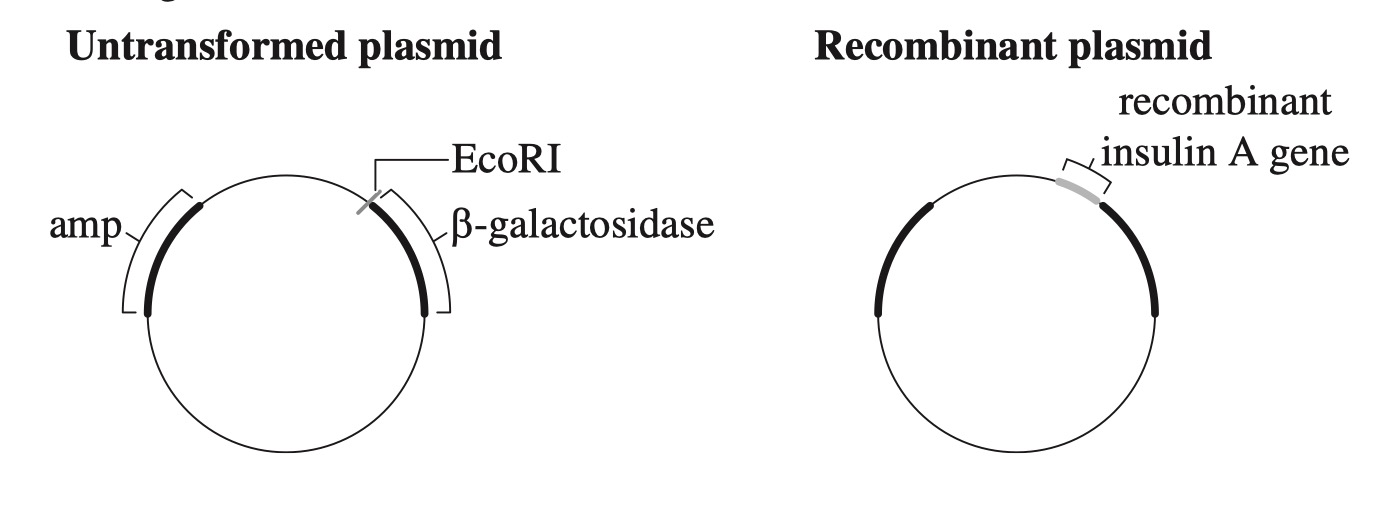
The production of genetically modified insulin involves the creation of two recombinant plasmids, each one containing the sequence for one of the two polypeptides (insulin A and insulin B) required to produce the functional insulin protein. One of the plasmids is spliced with an ampicillin resistance gene (amp) and
a -galactosidase gene (with a EcoRI restriction enzyme/endonuclease binding site next to it). When active, the -galactosidase gene produces galactosidase, which converts X-gal from a colourless compound to a
blue compound. The following diagram shows the insulin A gene being inserted into this plasmid. The process for the insulin B gene insertion is the same.
a. Explain why the insulin A and B gene segments used to form the recombinant plasmids
are smaller than the gene segments located within the nuclei of eukaryotic cells. 2 marks
b. Outline how the insulin A gene is combined with the untransformed plasmid to form
the recombinant plasmid. 3 marks
For both the insulin A and B polypeptides to be synthesised, the two recombinant plasmids must be successfully inserted into a bacterium and grown into large quantities.
c. Describe how the functional insulin protein is formed once the insulin A and B polypeptides
have been synthesised within the bacterium. 1 mark
d. The success rate of the production of the recombinant plasmids and plasmid insertion into bacteria is not very high.
Based on the information provided, outline how colonies of genetically modified bacteria are grown and how they are isolated from bacteria that have not been successfully
transformed. 2 marks
Question 4 (7 marks)
Cellular respiration is the process by which cells derive energy from glucose.
a. State two features of cellular respiration that occur in the mitochondrial matrix. 2 marks
b. Most eukaryotic cells form 30 molecules of ATP from the breakdown of one glucose molecule.
State the ATP yield for each step in the process of aerobic respiration. 3 marks
c. Identify and outline the process by which biofuel is produced from biomass. 2 marks
Question 5 (7 marks)
Corn is a C4 plant that grows very well in arid environments.
a. Explain how two adaptations of C4 plants that enable them to thrive in arid environments
provide a survival advantage. 4 marks
b. A controlled experiment was conducted to compare the growth of corn plants with tomato plants, which are C3 plants, when exposed to various temperature and water availability conditions. Each plant started with the same biomass, and the plants were left for four weeks under their set conditions before being reweighed. The percentage change in biomass was then recorded for each plant. The results of the experiment are shown in the following table.
| Conditions | Corn biomass change (%) | Tomato biomass change (%) |
| 25°C and normal water | +10 | +11 |
| 25°C and high water | +12 | +10 |
| 25°C and low water | +14 | +4 |
| 35°C and normal water | +18 | +15 |
| 40°C and low water | +25 | +2 |
i. Identify the dependent variable in the experiment. 1 mark
ii. Explain why every plant in the experiment, regardless of its plant type and conditions,
had an increase in biomass. 2 marks
Question 6 (8 marks)
The human body’s ability to distinguish between self- and non-self antigens is an important first step in any immune response. When the body responds to viral diseases such as COVID-19, most of the body’s cells are spared from destruction by the immune system but some are targeted for destruction with laser-like precision.
a. Describe how the immune system of a person who has recently contracted COVID-19 would distinguish between cells that need to be destroyed and cells that do not need
to be destroyed. 2 marks
The immune system consists of many different types of cells, each playing an important role in immunological health.
b. In the table below, identify whether each immune cell is part of the innate immune system,
| Immune cell | Innate, adaptive or both | Justification |
| natural killer cells | ||
| plasma cells |
c. The lymphatic system is another part of the immune system. It contains ducts that lead to and from the lymph nodes.
In terms of the immune system, state one function of the ducts that lead to the lymph nodes
and one function of the ducts that lead from the lymph nodes. 2 marks
Question 7 (8 marks)
In 2021, 8.4 million people around the world had type 1 diabetes. A modelling study has predicted that by 2040, this number may rise to 17.4 million. Type 1 diabetes causes the immune system to see insulin-secreting -cells in the pancreas as foreign and, over time, these cells are destroyed.
a. What type of immune disorder would type 1 diabetes be categorised as? 1 mark
-cell destruction occurs when specific cytotoxic T cells are formed against markers on the surface of the cells.
b. What type of immune response involves T cells? 1 mark
There are different types of T cells involved in immunity. This is significant for targeted immunotherapy to treat type 1 diabetes. Some T cells behave as helper cells, and some T cells behave as cytotoxic cells.
c. Outline the function of each of the following.
i. helper T cell 1 mark
ii. cytotoxic T cell 1 mark
d. In 2022, the drug teplizumab was approved for use in the USA as an immunotherapy treatment for diabetes. Teplizumab is a modified monoclonal antibody that binds to the T lymphocytes that attack the insulin-producing -cells in type 1 diabetes patients.
The drug specifically attaches to a molecule called CD3, inhibiting the T cells’ ability to attack the -cells.
Explain how teplizumab can be produced. 4 marks
Question 8 (8 marks)
The TBX3 gene controls leg length in many animals, including horses. A study using many modern horses found a direct correlation between the lengths of the horses’ legs and the amount of TBX3 gene activation, which explains how leg length in ancestral horses may have evolved. The following diagram shows the bones of the front lower legs of three ancestral horses and the modern horse. A scale is provided.
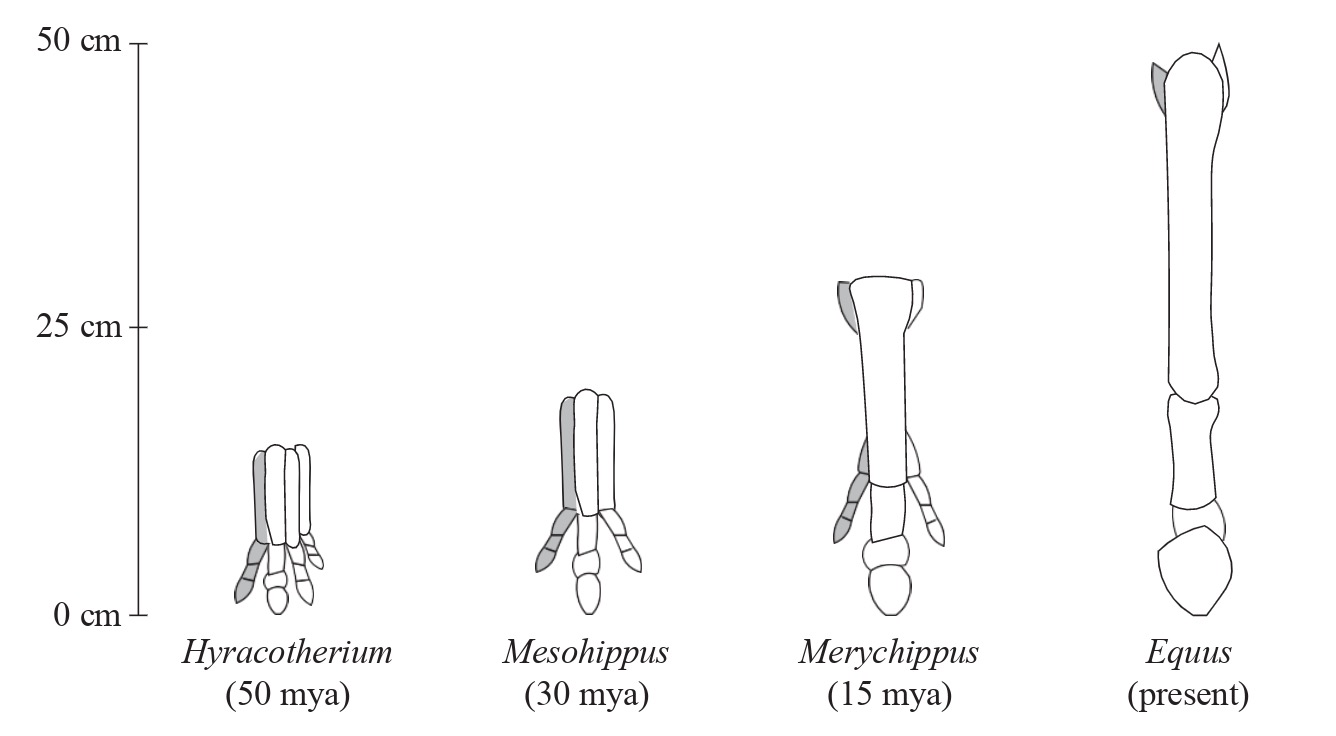
a. In terms of mutations in the TBX3 gene, describe how the long legs of Equus evolved
from the short legs of Hyracotherium. 4 marks
As shown in the diagram on page 26, the middle digit in Hyracotherium became bigger over time, forming a single hoof in Equus. The digits on either side did not become bigger. Only remnants of them remain
in Equus; an example is shaded in the diagram.
b. i. State the term that describes the remnant digits that remain in Equus. 1 mark
ii. Considering the ancestral horse species from 50 mya to 15 mya, why is it less appropriate to suggest that the remnant digits have been selected against rather
than suggesting that the middle digit has been selected for? 1 mark
c. Some sceptics suggest there is not enough evidence available to make conclusions relating to the evolution of the horse. They argue that too few fossils have been found to make conclusions.
Describe two pieces of evidence that would need to be present in a 25-million-year-old fossil of a previously undiscovered ancestral horse that would support the evolution
of Equus from Hyracotherium. 2 marks
Question 9 (8 marks)
Modern humans arrived in Indonesia, which is located in Southeast Asia, about 60 000 years ago.
The distant ancestor of modern humans Homo erectus migrated out of Africa about 2 million years ago, travelled to Indonesia and lived there until about 100 000 years ago, long after they had gone extinct elsewhere in the world. When sea levels rose, Homo erectus became isolated on some of the Indonesian islands, including Java. Several Homo erectus fossils have been found in Java along with a range of tools that have been dated to about 100 000 years old.
a. Define the term hominin. 1 mark
b. Identify and outline the method of dating fossils that are expected to be 100 000 years old. 2 marks
When modern humans arrived in Indonesia, Homo erectus had probably gone extinct because rising sea levels changed the environment to an extent that was detrimental to their survival. Researchers also argue that Homo erectus splintered into the species Homo floresiensis and Homo luzonensis, in addition to other species located throughout Southeast Asia, approximately 100 000 years ago. Fossils of Homo floresiensis were found on the Indonesian island of Flores and dated to exist between 100 000 and 60 000 years ago. Fossils of Homo luzonensis were found on the island of Luzon in the Philippines and dated to exist between 70 000 and 50 000 years ago.
c. In the space below, draw a scaled phylogram for the last 500 000 years of the Homo erectus
branch of the evolutionary tree in Southeast Asia. Include both Homo floresiensis and Homo luzonensis. 3 marks
d. During its migration to Java, Homo erectus may have interbred at some point with the Denisovans. The Denisovans may have also interbred with modern humans in Indonesia and New Guinea as recently as 30 000 years ago. Much of the Denisovan genome has been sequenced, but the Homo erectus genome has not.
Based on the information provided, describe the evidence of this interbreeding that would
be present in the modern Southeast Asian human genome. 2 marks
Question 10 (10 marks)
Yeast is a single-celled, eukaryotic heterotroph that is used extensively in the food and alcohol industries. It is also used as an experimental model for a variety of other purposes. An investigation was conducted by a diet and nutrition organisation in Australia to study the effect of different types of sugar and sugar substitutes on cellular respiration and heat production in yeast. The following method was used.
- Make four 10% yeast solutions by mixing 5 g of dried yeast with 50 ml of fresh tap water in a large, conical flask.
- Make four 2% sugar solutions by mixing each sugar/sugar substitute (glucose, low-calorie sweetener, saccharin and stevia) with 50 ml of fresh tap water.
- Add each sugar solution to a 10% yeast solution in the conical flask, making a 100 ml mixture.
- Place a thermometer into each sugar–yeast solution and record the initial temperature.
- Measure the temperature change from the initial temperature every 30 minutes for a 4-hour period. The experiment was repeated three times.
a. State the hypothesis of the experiment. 1 mark
b. Identify one variable that should have been controlled in the experiment and outline how
it may have influenced the reliability of the data collected. 2 marks
c. A Biology student who was reading about the investigation stated that because the experiment was repeated and reproduced, the reliability of the data collected was increased.
Determine whether the student’s statement is correct. Justify your response. 2 marks
Some of the data collected during the experment is recorded in the following table.
| Sugar/sugar substitute type | Temperature change after 0 minutes (°C) | Temperature change after 30 minutes (°C) | Temperature change after 120 minutes (°C) | ||||||
| Trial 1 | Trial 2 | Trial 3 | Trial 1 | Trial 2 | Trial 3 | Trial 1 | Trial 2 | Trial 3 | |
| glucose | 0.0 | 0.0 | 0.0 | 9.0 | 9.2 | 9.5 | 6.5 | 6.2 | 5.8 |
| low-calorie sweetener | 0.0 | 0.0 | 0.0 | 2.1 | 2.1 | 2.6 | 1.8 | 1.7 | 1.6 |
| saccharin | 0.0 | 0.0 | 0.0 | 2.6 | 2.1 | 2.2 | 1.2 | 1.6 | 1.3 |
| stevia | 0.0 | 0.0 | 0.0 | 1.9 | 2.1 | 2.0 | 1.1 | 1.1 | 1.2 |
d. If the temperature of the glucose mixture for trial 2 at 30 minutes was 29.2°C, what was the initial temperature of the mixture? 1 mark
e. Analyse the data in the table above. 4 marks