mitosis is part of the cell cycle, and aims to produce two identical daughter cells from one cell
mitosis is preceded by interphase, during which the cells goes DNA replication
stages of mitosis are prophase, metaphase, anaphase, telophase, and cytokinesis
prophase
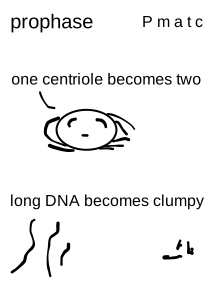
condensation of chromosomes
during prophase, the DNA that was replicated during interphase is condensed from strands with lengths reaching 0.7 μm down to 0.2-0.3 μm
this way, the loose and string like DNA become clumped together
movement of centrosomes
Replicated centrosomes from interphase move apart towards opposite poles of the cell, powered by centrosome associated motor proteins
interdigitated microtubules from each centrosome interact with each other, helping to move the centrosomes to opposite poles
chromatin begins to condense and centrioles move to the opposite sides of the cell, creating spindle fibers between them
as sister chromatids become visible, the nucleus disappears in prophase
metaphase
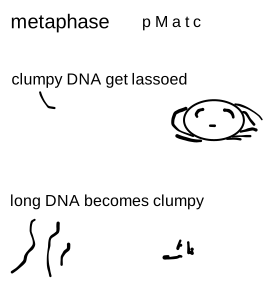
the chromosomes start to line up at the equator of the cell and attach themselves to a spindle fiber
spindle fibers from the spindle apparatus attach to the chromosomes and line them up along the middle of the cell
anaphase
in cell biology, anaphase is the third stage of mitosis when replicated chromosomes are split and the newly-copied chromosomes, sister chromatids, are moved to opposite poles of the cell
one chromatid from each chromosome is dragged in opposite directions of the cell by the centriole
spindle fibers shorten and pull each of the sister chromatids to either side of the cell by the kinetochore latching onto the spindle fibers
telophase
the chromosomes start to de-condense and become thinner
new nuclear membranes starts to form around the chromosomes
cytokinesis
in cytokinesis the cell divides into two daughter cells, completing division